Course 825 Fundamentals of Magnetic-Resonance Imaging (MRI)
Available course dates
This course has no planned course dates.
If you are interested in this course, contact us at cei@cei.se
TECHNOLOGY FOCUS
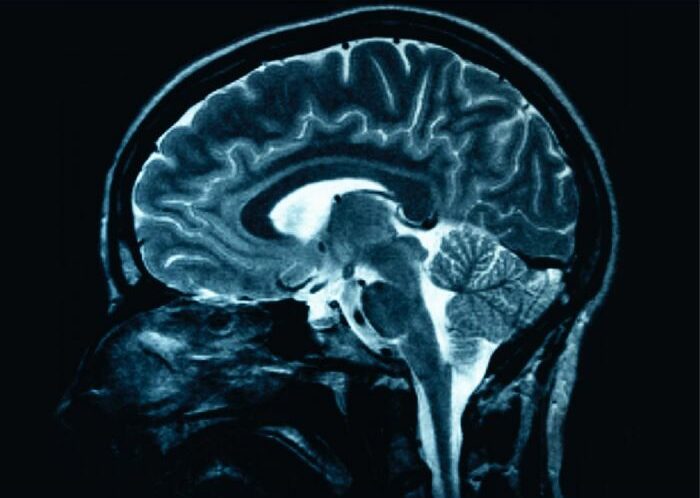
MRI is a high-resolution nonionizing (safe) tomographic technique used extensively for medical diagnostics and other related applications. It offers outstanding soft-tissue contrast that makes it superior to all other medical imaging techniques. MRI is based on creating two distinct energy states for the quantum spin of hydrogen nuclei in water molecules using a very strong static magnetic field B0. Applying an RF magnetic field B1 of the spin Larmor frequency f0 (about 42 MHz for each B0-Tesla) results in perturbing the distribution of the hydrogen nuclei (protons) between the two energy states. Upon restoring the thermodynamic equilibrium of this distribution, the spins radiate a highly coherent electromagnetic field at their Larmor frequency f0 that is used for a 3D-image construction.
MRI scanners with moderate B0 (up to 3T) excite and receive the RF B1-field by using coil arrangements operating more or less magnetostatically. They feature a predominant magnetic field and a very weak electric field with a nearly standing-wave field distribution (negligible spatial phase variation) and can be fully characterized using lumped elements and electric circuit theory.
Better image resolution and higher tissue contrast are, however, achieved by increasing the strength of the static magnetic field B0. Scanners with B0 > 4T (f0 > 160MHz) are categorized as “High Field”. RF structures (or simply RF coils) for excitation and reception of the corresponding B1-field have geometrical dimensions comparable to the operating wavelength. Therefore, they excite a significant electric field and exhibit propagation effects. The magnetostatic approximation is no longer valid for characterizing, modeling and optimizing such RF coils; they must be analyzed electromagnetically.
One of the objectives in the design of high-field RF coils is how to maintain the homogeneity of a circularly polarized B1-field (the so-called B1+-field) within a certain region of interest and, at the same time, minimize the associated electric field there. Homogeneity of the B1+-field is necessary for a uniform illumination of the image. Illumination in MRI can be defined as the strength of the spin transition from the lower to the upper energy state, which is attributed to the effect of the B1+-field in the excitation phase, where the RF coil acts as a transmitter. Minimizing the electric field, on the other hand, is necessary for increasing the signal-to-noise ratio (SNR) of the received MR signal radiated by the precessing spins during their back transition from the upper to the lower energy state. Lossy tissues interact with the electric field associated with the MR signal, giving rise to noise. A similar interaction takes place during the excitation phase and is responsible for heat development in the tissues. The latter is usually characterized by the tissue specific absorption rate (SAR).
In addition to a detailed presentation of the fundamentals of MRI, the course puts special emphases on a number of technological challenges. These include improving the homogeneity of the B1+-field for a better image quality, minimizing the electric field losses responsible for high SAR in the transmit operation and low SNR in the receive one, and making use of the concept of a phased array for focusing the RF field. These objectives can be achieved by using multi-channel operation and novel antenna structures.
COURSE CONTENT
The course begins with a comprehensive coverage of the physical and engineering fundamentals underlying the concept of Magnetic Resonance Imaging. This is followed by considering a typical Imager similar to those used in diagnostic Radiology at Clinics and Hospitals. The different constituents of such an Imager are described and explained in details. Different image attributes such as resolution, field of view, and contrast, as well as the image artifacts resulting from data discretization are discussed. The factors that affect the image quality in particular the image illumination and contrast as related to the homogeneity of the RF field are then considered. Special emphasis is put on high-field Imagers with B0≥7T, where the design of RF coils represents an engineering challenge. The course is finalized by considering the use of the concept of Phased Arrays, which is known in Antenna Theory, for improving the performance of RF coils.
WHO SHOULD ATTEND
The course is dedicated to Engineers, Scientists, and Academic Researchers, as well as Radiologists and Physicians involved in MRI diagnostics. A general background in Physics and Mathematics is required. Attending the course should help in understanding many of the image artifacts. This is necessary for, e.g., a better medical diagnostics. Engineering acquired skills include the capability of relating different system hardware components to image attributes. Economists with engineering background should benefit from the gained knowledge in optimizing operational costs of MR Imagers.
Daily Schedule
Day 1
Review of the Physics of Elementary Particles
- The Hydrogen Atom
- Classical-Mechanical Treatment
– Newtonian Mechanics
– Small Rotating Charged Spheres in a Static Magnetic Field
– Equations of Motion and Precessing
– Resonance Phenomenon
– Stable and Unstable Equilibriums
– Stored Energies
– Emission and Absorption of Energies
- Quantum-Mechanical Treatment
– Quantum States
– Quantum Transitions
- Thermodynamic Equilibrium
– Boltzmann’s Distribution
– Temperature, Entropy, and Heat Capacity
- Exercise
Day 2
Magnetic Fields
- The Static Magnetic Field
– Biot-Savart Law and Magnetic Field of DC Currents
– Cylindrical and Toroidal Coils
– Ohmic Losses, Dissipation, and Heat Generation
– Super Conductors
- Main Coil
– Field Homogeneity
– Improving Techniques
- Gradient Coils
– Field Linearity
– Improving Techniques
- The RF Magnetic Field
– Electric and Magnetic Fields
– Permittivity and Permeability
– Loss Mechanisms
- Field Polarization
– Linearly Polarized Field
– Elliptically Polarized Field
– Circularly Polarized Field
- RF Coils
– TEM Coils
– Birdcage Coils
– Loop Coils
– Field Homogeneity
- Exercise
Day 3
Magnetic-Resonance Imager
- Constituents
- Slice Selection
– Slice Thickness and Weighted Average
– Exposure Time and Illumination Bandwidth
- Phase Coding
- Frequency Coding
- Image Reconstruction
– One-Dimensional Fourier Transform
– Two-Dimensional Fourier Transform
- Data Discretization
– Resolution
– Aliasing and Field of View
- Noise and Image Artifacts
- Speedup of Image Reconstruction
- Exercise
Day 4
Radio-Frequency Transmitting and Receiving Structures
- Resonance, Quality Factor, and Signal-to-Noise Ratio (SNR)
- All-Body Coils
– Birdcage Coils
– TEM Coils
- Head Coils
- Surface Coils
- Coupled-Resonator Structures
– Resonant Electric Circuits
– Coupling and Bandwidth
- Homogeneity of the RF Field
- Exercise
Day 5
- Phased Array in Antenna Theory
- Phased Arrays as RF Coils
- Butler Matrix
- Segmentation and Parallel Data Acquisition
- Exercise
ALL COURSE DATES FOR THE CATEGORY: Sensors and Digital Imaging
014 Digital Camera Systems
020 Advanced Course on Image Sensor Technology
063 Advanced Optical Sensors: From Detectors to ASIC Integration with Edge AI and Functional Safety Considerations
Instructor: Dr. Farzad Parsaie
Optical sensors are evolving toward intelligence, downsizing, and multi-functionality, with critical roles in functional safety applications like autonomous driving, industrial automation, and medical diagnostics. Artificial Intelligence (AI) is enhancing optical sensor performance by improving data processing, signal-to-noise ratios, and handling dynamic scenarios, essential for high-fidelity measurements in these fields. This course covers these advancements, from photodetector fundamentals to ASIC integration and interfacing, with a focus on Edge AI and Functional Safety. Read full course description including course schedule063 Advanced Optical Sensors: From Detectors to ASIC Integration with Edge AI and Functional Safety Considerations
063 Advanced Optical Sensors: From Detectors to ASIC Integration with Edge AI and Functional Safety Considerations
835 A 360-degree View of the Sensors for Industrial Applications – Focusing on the Inductive Sensors
He is a new instructor of the CEI-Europe and is a professional expert on the subject of design and manufacturing of electronic sensors and ASIC designing, testing, and release for such products. After more than 25 years with one of the 10 global players on the field of industrial sensors – Balluff GmbH Company, Germany – he is currently as a freelancer in his consulting office FerSensC / Leonberg, Germany, carrying out sensor design projects and consulting.
Read full course description including course scheduleE-Course 601 Introduction to Correlated and Uncorrelated Noise in Imagers
Instructor: Professor Albert J.P Theuwissen
Introduction to Correlated and Uncorrelated Noise in Imagers In the introduction of the course, the difference between Correlated and Uncorrelated Noise will be explained. In a first instance, one can put all fixed-pattern noise sources or noise in the spatial domain under the header of Correlated Noise, and one can put all temporal noise sources or noise in the time domain under the header of Uncorrelated Noise. The course includes:- 42 minutes on-demand video
- 9 modules
- 3 months access
E-Course 602 Characterization of Noise in Dark
Instructor: Professor Albert J.P Theuwissen
Characterization of Noise in Dark It may sound strange that an image sensor, which is made to capture light, will be characterized first in dark conditions. But actually this should not really be surprising because noise will first become visible in the darkest parts of an image. For that reason the dark performance of an image sensor plays crucial role. It also sets the lower end of the dynamic range…… The course includes:- 116 minutes on-demand video
- 37 modules
- 3 months access
E-Course 603 Characterization of Noise with Light
Instructor: Professor Albert J.P Theuwissen
Characterization of Noise with Light In the third and last part of the course, the image sensor will be characterized with light input. First the fixed-pattern noise (= correlated noise) will be measured, and next the temporal noise (= uncorrelated noise) will be characterized. All measurements will be based on an existing camera and with uniform light input. For both noise types, correlated and uncorrelated, some extra statistical operations will allow to split the overall noise characterized into a contribution on row level, on column level and on pixel level. This gives very useful information on where to find the root cause of the noise sources. The course includes:- 126 minutes on-demand video
- 34 modules
- 3 months access
E-Course Bundle 601-603 Advanced course in image sensors and digital cameras
Instructor: Professor Albert J.P Theuwissen
The course includes:- 284 minutes on-demand video
- 80 modules
- 12 months access